To achieve immortality by entry into the National Baseball Hall of Fame is an honor like no other in the baseball world. Yearly, the cases of past players get scrutinized and examined under the proverbial microscope. New information brought on by the analytical revolution causes many to reexamine the credibility of the ballot members for their potential fit amongst the hallowed halls of Cooperstown. The voting to be enshrined into the National Baseball Hall of Fame feels unlike any of the other major sports Hall of Fame. And much of that is tied to the history that’s always presented in the present game. No other sport quotes and calls back to its history nearly as much as the incredible game of baseball. And that’s never more true than when speaking about the yearly crop of potential Hall of Fame candidates. So let’s examine those that make my “Official Unofficial 2026 Hall of Fame Ballot”.
My Official Unofficial ballot falls into three categories: definitive, borderline, and five percent rule candidates. The definitive Hall of Famer is an obvious and clear category. The borderline case gives weight to a player’s contributions and allows for a little leniency for their candidacy. But they have a compelling case based on their era and against their peers for induction into the Hall of Fame. And the third and final category of my ballot is those that could be in danger of falling off the ballot because of the 5% rule. I’ve covered my thoughts on this rule in a previous piece here on the BaseballBanterBroadcast.com. (Time to Change These 2 Rules for MLB Hall of Fame Voting)
DEFINITIVE HALL OF FAMERS
BALLOT SLOT #1: CARLOS BELTRAN (NEW YORK METS)
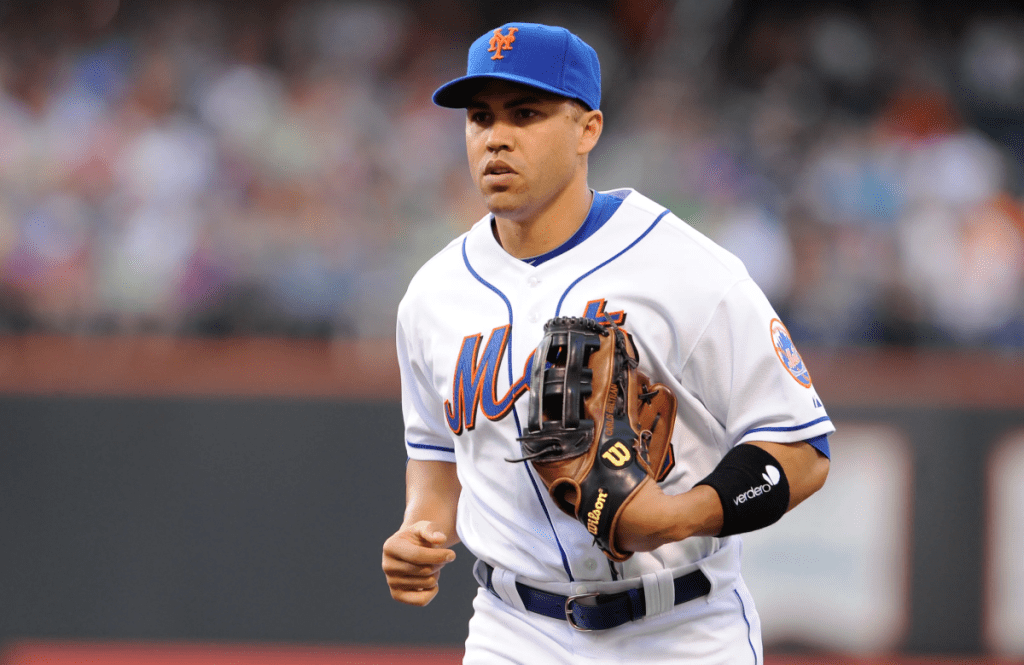
There’s little question that this year’s crop of contenders gives much more room for debate than over the past few seasons, which had new sure-fire “first ballot” Hall of Fame candidates added to the mix. This season, the clear candidate that should have honestly already been elected into the Hall if not for the Houston Astros’ sign-stealing scandal of 2017 is Carlos Beltran. The switching-hitting Beltran was one of the best players of his generation. Beltran’s combination of power, speed, and defense makes him a strong candidate for recognition in Cooperstown.
When examining his candidacy, you see his 435 career home runs place him 48th All-Time in MLB history, and amongst switch-hitters, Carlos ranks 4th All-Time. Adding the speed aspect of Beltran’s game, his 312 career stolen bases rank Carlos 162nd All-Time in MLB history. If not for his name being released by the report in The Athletic, which Carlos should have also been granted anonymity, as the other players were for that scandal, Beltran would have already been elected to the National Baseball Hall of Fame. The punishment for his involvement in the scandal has lasted far too long. It’s time to enshrine one of the greatest switch-hitters the game has ever had the pleasure to witness play the game into the most hallowed halls of the National Baseball Hall of Fame.
BALLOT SLOT #2: CHASE UTLEY (PHILADELPHIA PHILLIES)
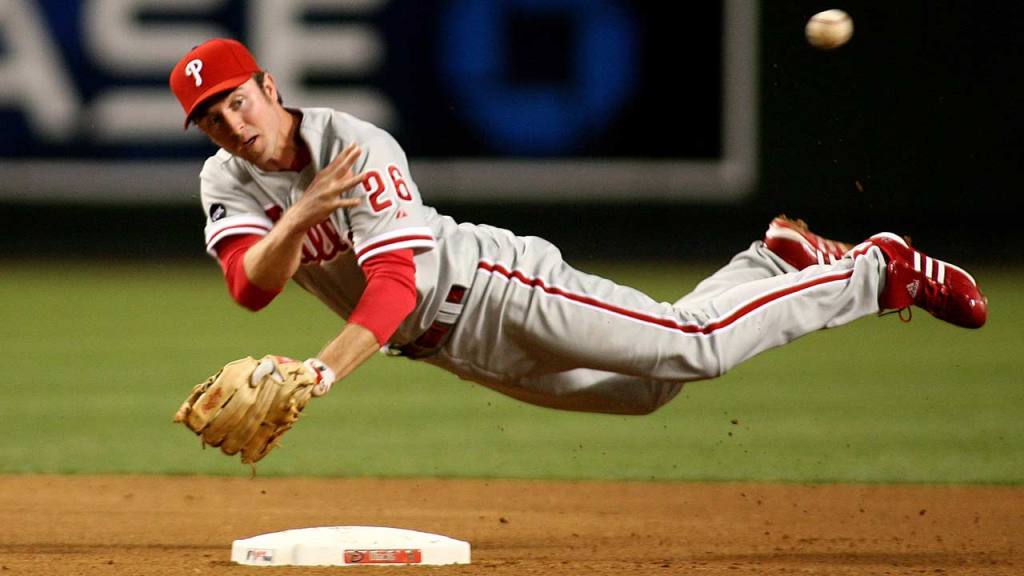
Chase Utley becomes an interesting test case for the rest of the members of this ballot in 2026. Because Utley is one of the players whose candidacy relies mostly on an extremely high peak studied through the lens of the modern game with modern analytics. Chase was not a player who was seen as a compiler (ie, Omar Vizquel). The second baseman also doesn’t have the”hardware” one would usually look for from a Hall of Fame player. Utley possesses four Silver Sluggers, six All-Star nods, and was a member of the 2008 World Series-winning Philadelphia Phillies team. Chase also has fewer than 2000 career hits, just a smidge over 250 home runs, and not much over 1000 RBIs for his career. And this is also a player whose OPS+ (where league average is 100 and an All-Star caliber player is 120) is 117 for his career.
Thus, Chase Utley is above average, but not someone who’s a knock-down, drag-out, and close the case type of Hall of Famer. Yet, when you think back to the player that was Chase Utley and his intelligence and his intangibles, you felt, as you were watching him, that this was the kind of player that belongs in Cooperstown. The second baseman may not have the full complement of stats that make this an easy selection for the Hall. But a Hall of Fame without Chase Utley feels a little less than complete.
BALLOT SLOT #3: ANDRUW JONES (ATLANTA BRAVES)
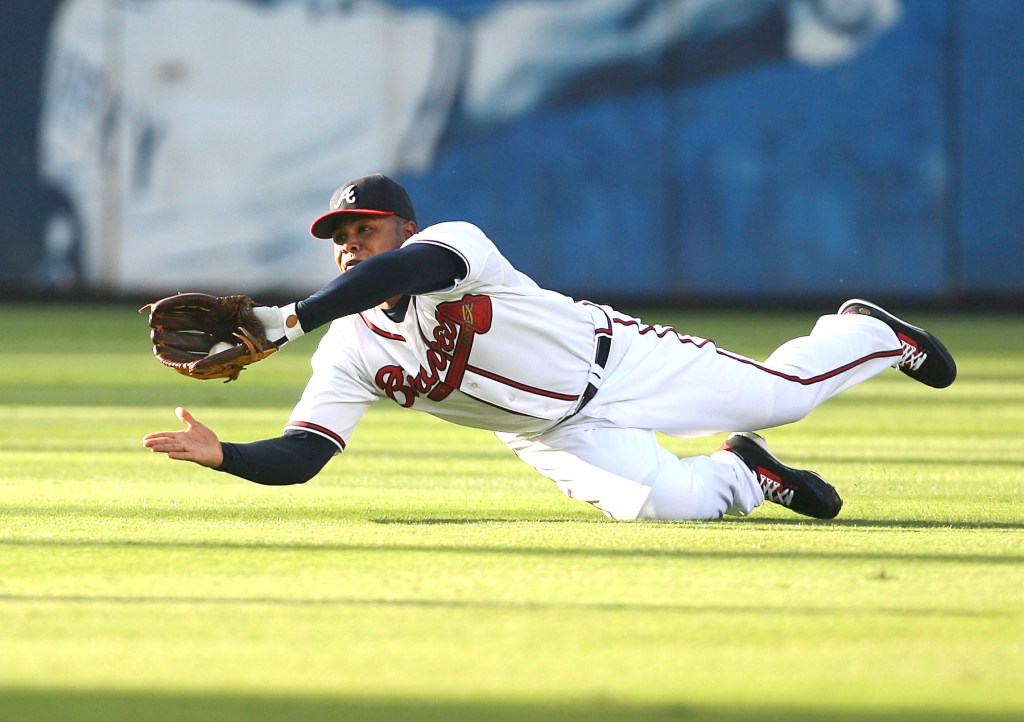
Andruw Jones has been someone whose case I’ve been championing for the last several years of these “Official Unofficial Hall of Fame ballots”. Jones is a player whose Hall of Fame case is built on the strength of his peak. When examining his defense and power combination, it’s a dynamic combination that merits inclusion in the Hall of Fame. Many pundits and fans who knock Andruw do so on the steep drop-off because of injuries late in his career. And by no means is Andruw’s case for the Hall of Fame a slam dunk. However, when you examine what he was able to do in his career stemming from a nineteen-year-old in the World Series through to his retirement, Andruw Jones will go down as quietly one of the best to ever roam the outfield in Major League Baseball history.
BALLOT SLOT #4: BOBBY ABREU (PHILADELPHIA PHILLIES)
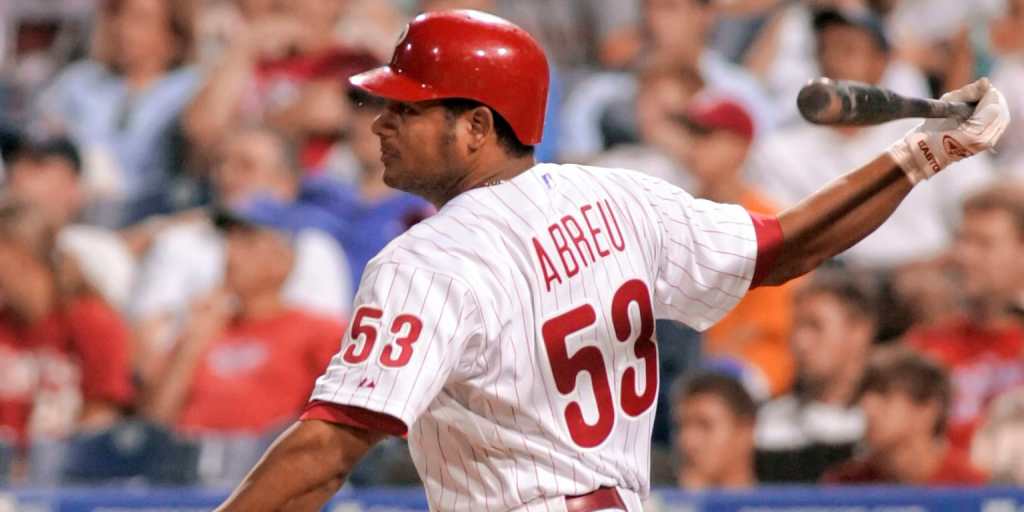
Analyzing the Hall of Fame candidacy of Bobby Abreu is an intriguing case study. At the mind’s first remembrance of Abreu’s playing career, one would not think about Bobby as a Hall of Famer. However, one’s mind would be mistaken by such a claim. Bobby Abreu is one of the more underrated players on this year’s ballot. And it’s in that quiet brilliance that his candidacy truly stands out. Bobby is penalized by the era in which he played. By competing against some of the most historic names in the gam,e Abreu missed out on any of the classic “hardware” we expect our Hall of Famers to possess. Nevertheless, Bobby Abreu finished his career with thirteen consecutive seasons of an OPS+ of 118 or higher. And when you examine his career counting stats of nearly 2500 hits, nearly 300 home runs, and 400 steals, Abreu provided a quality blend on offense with solid defense, even winning a Gold Glove award back in 2005. Studying Bobby Abreu, especially in the context of his era and against his peers, squarely put the Venezuelan outfielder into the National Baseball Hall of Fame.
BALLOT SLOT #5: FELIX HERNANDEZ (SEATTLE MARINERS)
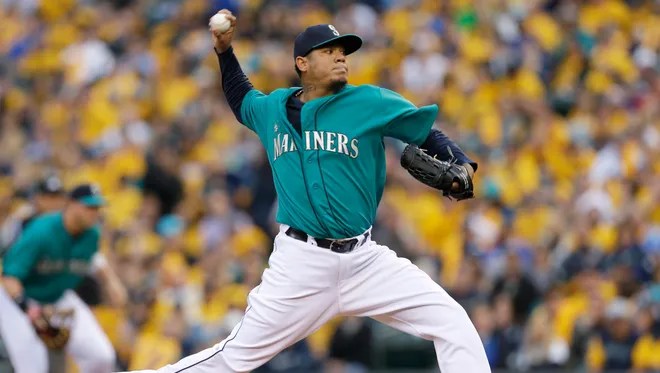
When you are known by the moniker “King,” there is undoubtedly a royal quality about you. And for “King” Felix Hernandez, that quality in the baseball world is known as being a Hall of Famer. Felix Hernandez may not at first glance seem like a definitive or obvious choice for the Hall of Fame. However, when examining his case through the context of his era, there was no more feared a pitcher than Hernandez. Hernandez may also not have the counting stats that we expect from a Hall of Fame pitcher, the 3000 strikeouts or the 300 wins, but when you reevaluate, looking at the manner in which pitchers began being used during Hernandez’s era, the goalpost and the criteria for “Hall of Fame” pitchers began to shift. Felix Hernandez will be looked at as one of the more underrated pitchers to grace the halls of Cooperstown. Felix nabbed six All-Star selections and earned a Cy Young award, to go along with two ERA titles during his career. While the numbers may not stand out as a sure-fire Hall of Famer, Hernandez does belong amongst the immortalized players in the National Baseball Hall of Fame.
BORDERLINE HALL OF FAMERS
BALLOT SLOT #6: COLE HAMELS (PHILADELPHIA PHILLIES)

Cole Hamels becomes an interesting candidate, and even more so because of the claims I’ve made about Felix Hernandez. When you examine the numbers comparing the two players, Cole Hamels is better. And by the same logic as previously applied, Hamels also merits inclusion into the Hall of Fame. The reason that Hamels’ case falls into the borderline category is simply because of a trick of the mind. When thinking back to his era, Cole was not thought of as a Hall of Fame pitcher in the same way that Felix Hernandez was thought to be a primed Hall candidate. However, as mentioned, Cole Hamels actually has better numbers that would be closer to the Hall of Fame metrics of old than Felix. Cole Hamels may not be remembered as a Hall of Famer by sheer memory, but upon genuine reflection, Cole Hamels truly has a case to be enshrined in Cooperstown.
BALLOT SLOT #7: TORII HUNTER (MINNESOTA TWINS)
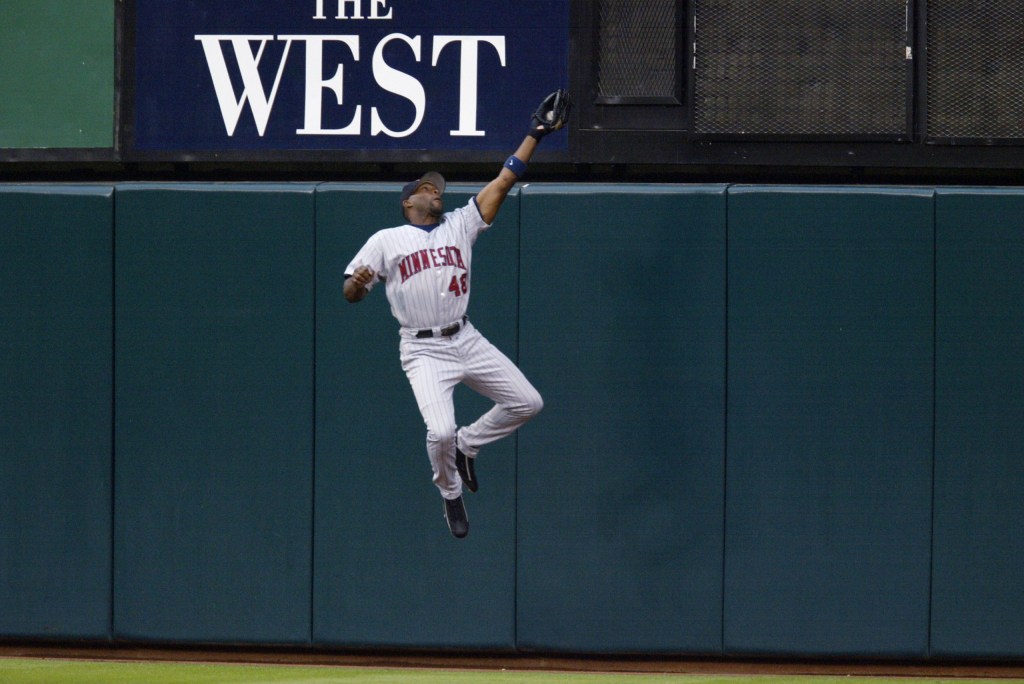
The Hall of Fame case of Torii Hunter rests on that of the aforementioned Andruw Jones. Essentially, Torii Hunter is Andruw Jones lite. And while that may initially sound like a knock on Hunter, it is not. Torii wasn’t quite the offensive force that Jones was in his prime, but Hunter was every bit the defensive player that Andruw was during Torii’s career. Hunter’s candidacy rests on the rest of his defense and being a high quality above average player for basically all of his nineteen-year career in the Major Leagues. Many people will overlook Torii Hunter because of the fact that the better version of him, Andruw Jones, has not yet been enshrined in the Hall. However, the fact that the Baseball Writers Association of America (BBWAA) has been getting it wrong all of these years should not further penalize Torii Hunter’s inclusion into Cooperstown.
5% RULE CANDIDATES
BALLOT SLOT #8: DUSTIN PEDROIA (BOSTON RED SOX)
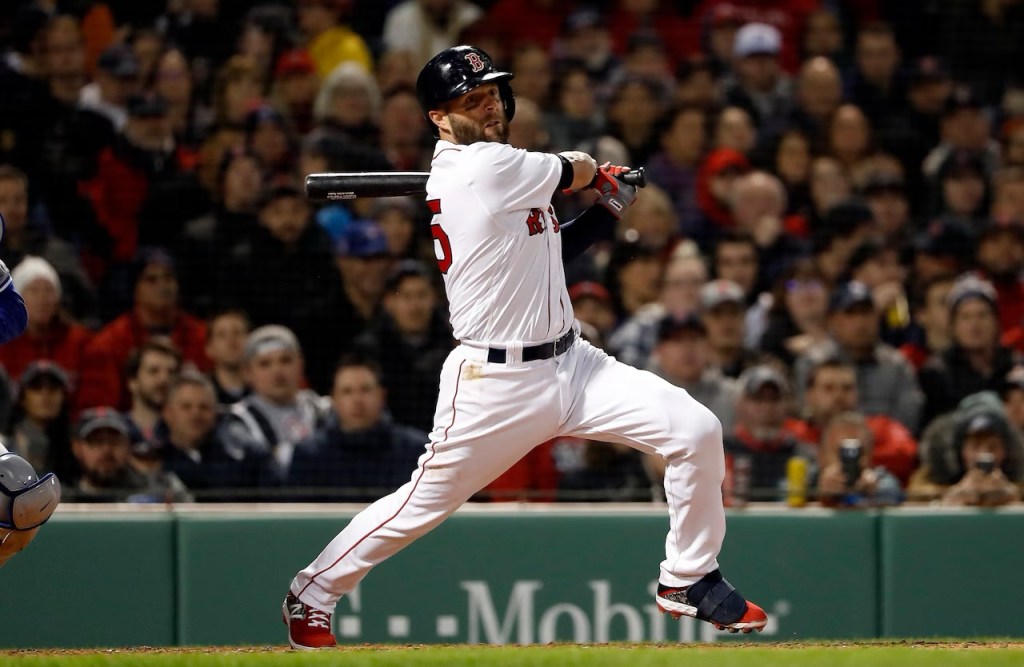
Let’s begin by saying that Dustin Pedroia was on a Hall of Fame trajectory before injuries derailed his career. And yes, we’ve heard this about many players in the past, who for one reason or another their careers took a nosedive from the once promising historic projections. Pedroia is another in a long line of players that fits that mold. Dustin becomes an interesting candidate because many voters are looking for longevity and elevated performances throughout that extended career run. Pedroia won’t have the career numbers that many will look for in a “Hall of Fame” player. For his career, Dustin has barely over 1800 hits, less than 150 home runs, and not even 800 RBIs. However, the hardware for Pedroia is there; this is a former MVP, rookie of the year award winner, a 4-time All-Star, 4-time Gold Glove, Silver Slugger winner, and, most importantly, a 2-time World Series champion.
The reason that Dustin makes my ballot is that while I’m truly unsure about how few is too few to get into the Hall, even with the baseline metrics for inclusion lowering, I’m not sure Pedroia gets even to those numbers. But, the bigger concerns for me with a player like Dustin Pedroia are that he will fall off the ballot because the injuries that took their toll on his once highly promising career could also grab hold of his potential inclusion on future Hall of Fame ballots. We’ve seen the longstanding damage that has been done by the shortened career numbers for Don Mattingly, whose peak and total contribution were far greater than that of Pedroia, on Mattingly’s Hall of Fame candidacy. So the fear is that Pedroia will fall off without a proper evaluation of his case. And that’s why he gets my vote.
BALLOT SLOT #9: DAVID WRIGHT (NEW YORK METS)
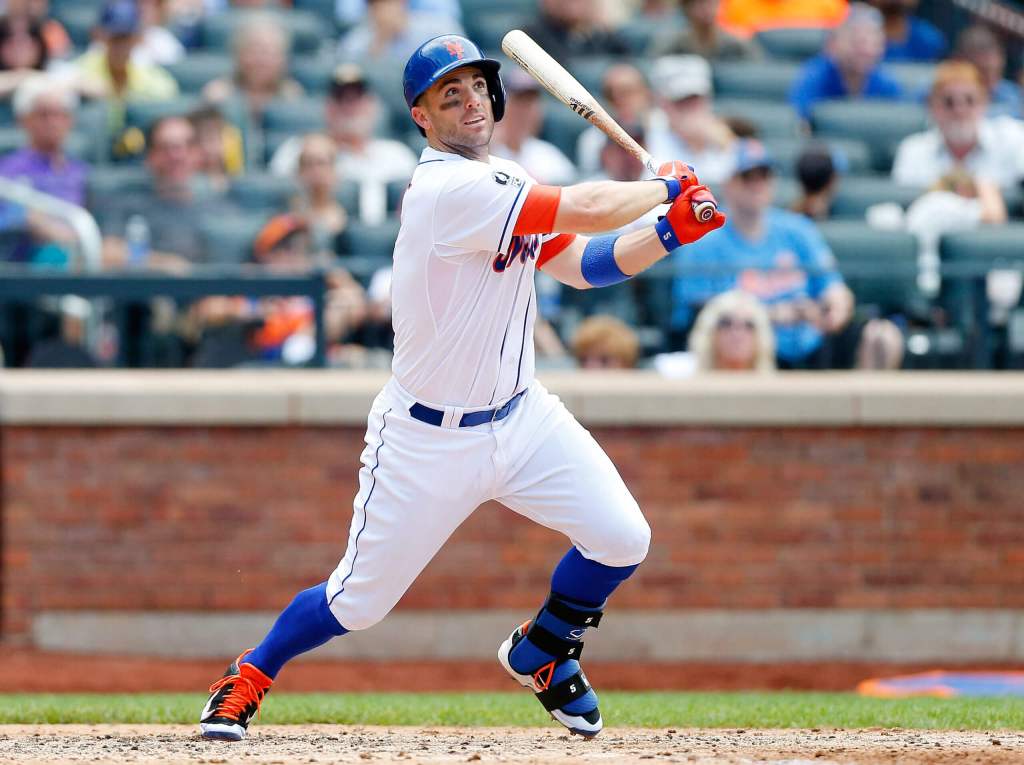
Like Dustin Pedroia before him, David Wright falls into the exact same qualifications and criteria for me. David Wright was another player with an extremely bright future whose career was besieged by injuries. And in an honest evaluation, David Wright’s career numbers surpass those of Dustin Pedroia in every category except for hits and batting average. The main key difference between the cases of Dustin Pedroia and David Wright comes down to the hardware. Wright was a seven-time All-Star and a two-time Gold Glove and Silver Slugger winner, but there are no MVP trophies or World Series trophies on the mantle of the once heralded “Captain America”. David was close on a few MVPs, finishing top nine in four different seasons, but never came closer than fourth in the final MVP tally. Dustin Pedroia and David Wright will forever be linked when it comes to Hall of Fame voting, much like Barry Bonds and Roger Clemens (but for obviously very different reasons). Thus, both Pedroia and Wright deserve a longer look at their candidacies, and with the 5% rule still in effect, they could both find themselves eliminated from further consideration before their cases can truly be appreciated. And that’s why they both make my ballot.
BALLOT SLOT #10: MARK BUEHRLE (CHICAGO WHITE SOX)
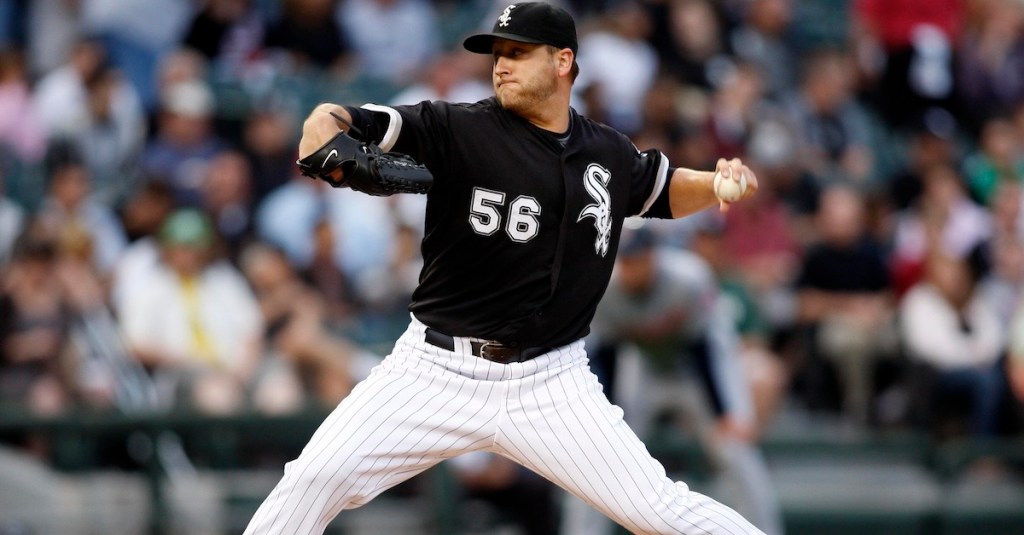
Mark Buehrle is one of the more underrated candidates on the ballot this season. If you were to perform a comparative analysis assessment on Buehrle, you would find him amongst the similar crop of pitchers of the ilk of Andy Pettitte and Cole Hamels from this year’s ballot. Mark is a quiet ace and someone who may be seen as a compiler, yet without any of the big stats required for a compiler. Mark doesn’t have the “sexy numbers” of the 300 wins or the 3000 strikeouts. In fact, Buehrle has only one season where he finished even in the top five of Cy Young voting. When you examine his numbers over his sixteen-year career, Mark finished with 214 wins and a career ERA of 3.81 with a career ERA+ of 117. Again, the metrics for starting pitching, more than any other position in Hall of Fame voting, will need to start being examined and analyzed differently. And if Mark Buehrle were to fall off the ballot due to the horrendous 5% rule, his potential claim for being a Hall of Famer may be passed on and overlooked. This is not to say that Buehrle is questionably deserving of the honor to be elected. But rather, simply his presence on my ballot is to preserve the opportunity to study his case in the context of his peers and his era, and that Buehrle doesn’t fall victim like many others before him of not being “remembered” as a Hall of Famer, knocking his case, before it’s given its proper contextual examination.
Dishonorable Mention
Let me begin by saying, each year when the Hall of Fame comes around, it becomes an exercise in mental exhaustion and paralysis by analysis. Most notably, as I penned in a previous article here on the BaseballBanterBroadcast.com, about my favorite player, Alex Rodriguez, his case on a strictly numbers basis is easily a first ballot upper echelon “Inner Circle” Hall of Famer. But much like Alex during his playing career, it’s not that simple. Usually, my criteria for my ballot will be subject to: if you failed a PED test after testing began in 2004, you are immediately discounted from qualifying for my ballot, regardless of your qualifications. That’s why, as feared a hitter and deserving of merit based solely on that, Manny Ramirez also does not find the light of day on my Official Unofficial Hall of Fame ballot every year.
Then that leaves the argument open because ARod NEVER failed a test by Major League Baseball. So he would technically be immune to my justification and stipulations for inclusion on my ballot. In a few years, one of the best second basemen of all-time, Robinson Cano, will not be on my ballots. But while never failing a test, Alex was hit with the longest PED suspension, without a lifetime ban, of anyone because of the Biogenesis scandal that revolved around PEDs. Not to mention, the absolute circus of a show that Rodriguez put on after the news was being released and revealed to the general public. Alex Rodriguez was my favorite player, and while he’s been retired since August 12th, 2016, a game I had the absolute honor and privilege to attend in person, I would still count Alex’s case as akin to a failed PED test and have not been able to list his name on my Hall of Fame ballot.
A third player that pains me to have left off my ballots is that of Andy Pettitte. Pettitte is one of my all-time favorite pitchers. The lefty with the intimidating stare just over his glove before he started carving up batters with that nasty cutter in his repertoire. Andy, like Alex, never failed a test. Unlike Alex, Andy confessed early on enough about when he used HGH in 2002 and 2004. Because of said confession, Andy was suspended in 2004 for the use of the banned substance. And to this point, Andy Pettitte has been left off my ballots. Following that confession, Andy pitched for another four seasons before ultimately retiring after the 2013 season. And during that timeframe, Pettitte never failed any other test for PEDs. Pettitte’s admission about his use will likely be the clause that keeps him out of the Hall of Fame. Because it’s definitely been the reason he hasn’t made my ballots, despite definitely deserving to be a Hall of Famer, especially given what he accomplished in the postseason on top of his regular-season success.
 Baseball Banter Broadcast
Leave a comment