Baseball has always been a game of tradition, but it has also evolved. From the introduction of the designated hitter to the recent pitch clock addition, change has often arrived cautiously, sometimes controversially, yet ultimately productively.
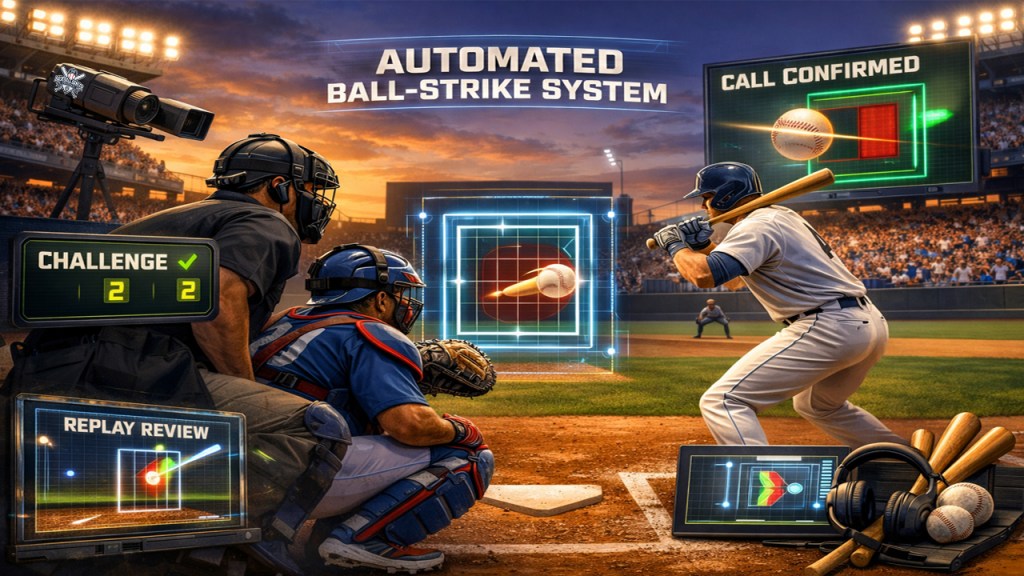
The 2026 MLB season will welcome the implementation of the Automated Ball-Strike (ABS) system. The ABS system will allow players to challenge umpire calls with 12-camera tracking, as approved by the competition committee. Each team gets two challenges per game, with successful challenges retained, aimed at reducing ejections. ABS is designed to call balls and strikes electronically, aiming to improve accuracy and speed up the pace of the game.
The system has been tested out during minor league games, and we are currently seeing it used as spring training games take place. While I’ve been watching my favorite team utilize this system in spring training, I can’t help but get excited to see it used in major league games when the season starts. I think this will be a fantastic addition to the game.
Fixing the strike zone problem
Every umpire has a slightly different interpretation of the strike zone. Some favor the high strike, and others squeeze the outside corner. For decades, pitchers, hitters, and managers have adjusted to the personal tendencies of individual umpires. While variability has long been considered part of baseball’s “human element,” it has also created inequities.
In today’s era of advanced broadcasting, every pitch is tracked and displayed to fans in real time. When a pitch clearly clips the zone but is ruled a ball or vice versa, the disconnect is obvious. These moments can swing at-bats, innings, and even entire games.
The ABS system addresses this directly. Using advanced tracking technology to determine whether a pitch crosses the strike zone, it ensures consistent enforcement from the first inning to the ninth. A standardized strike zone shifts the focus back to player performance rather than umpire interpretation.
Assisting, not replacing, umpires
Importantly, the system does not eliminate umpires. They remain central to managing the game, enforcing rules, and maintaining order on the field. ABS simply assists with determining whether a pitch meets the rulebook definition of a strike.
This hybrid approach preserves the presence of the human umpire while offering a safety net for clear misses. It also adds a strategic element: players must decide when a moment is important enough to risk a challenge.
Instead of heated arguments and prolonged disputes, a quick review provides resolution.
The framing debate
Some may argue that pitch framing, the catcher’s ability to subtly influence an umpire’s call, is an art form that ABS diminishes. Analytics departments have placed measurable value on framing. Over a full season, elite framers have been credited with saving dozens of runs by turning borderline pitches into strikes.
However, framing’s value depends entirely on persuading a human umpire to call a pitch differently than its exact location would dictate. It is not about changing the pitch itself; it is about influencing perception.
If the strike zone is clearly defined in the rulebook, rewarding a player for distorting that zone raises questions of fairness. ABS ensures that pitchers are rewarded for command and hitters are rewarded for discipline, not for how well a catcher can “sell” a borderline pitch.
Framing will not disappear entirely with this system. Umpires will still call most pitches in real time. But with ABS as a backstop, its influence becomes situational rather than decisive. Catchers may still attempt to present borderline pitches cleanly, especially early in counts or in moments when a team prefers not to use a challenge. The skill will remain part of the craft, just no longer powerful enough to consistently override the rulebook.
I also believe that this system will add more value to catchers. Batters, pitchers, and catchers can all decide to challenge a pitch. In a recent New York Yankees spring training game, Fernando Cruz and Austin Wells disagreed on challenging a pitch that was correctly called a ball. Wells didn’t want Cruz to challenge it, but he did, and the pitch ended up being very much outside of the zone. I think a catcher’s ability to know the strike zone, know when to challenge, and how accurate he is when challenging will be viewed the same way as the “art” of framing once was. If a catcher has a high accuracy on challenges, it will make the catcher’s value skyrocket.
Protecting the integrity of the game
Baseball has been around for centuries and has thrived because it has adjusted thoughtfully when necessary. ABS is not about removing the human element; it is about refining it.
The heart of baseball remains pitcher versus hitter. By ensuring that balls and strikes are called consistently and accurately, MLB strengthens the integrity of that duel. In the end, ABS represents a commitment to fairness, modernization, and the long-term health of the sport.
 Baseball Banter Broadcast
Leave a comment